
Non-GamStop Casinos Have Become a Gateway to Illegal Gambling, Gambling Commission Finds
Searching for gambling sites "not on GamStop" is no longer just a way for self-excluded people to get around the scheme, the Gambling Commission has found. For many gamblers the phrase now means sites with fewer checks and faster withdrawals, and it has become one of the main routes into Britain's illegal market.
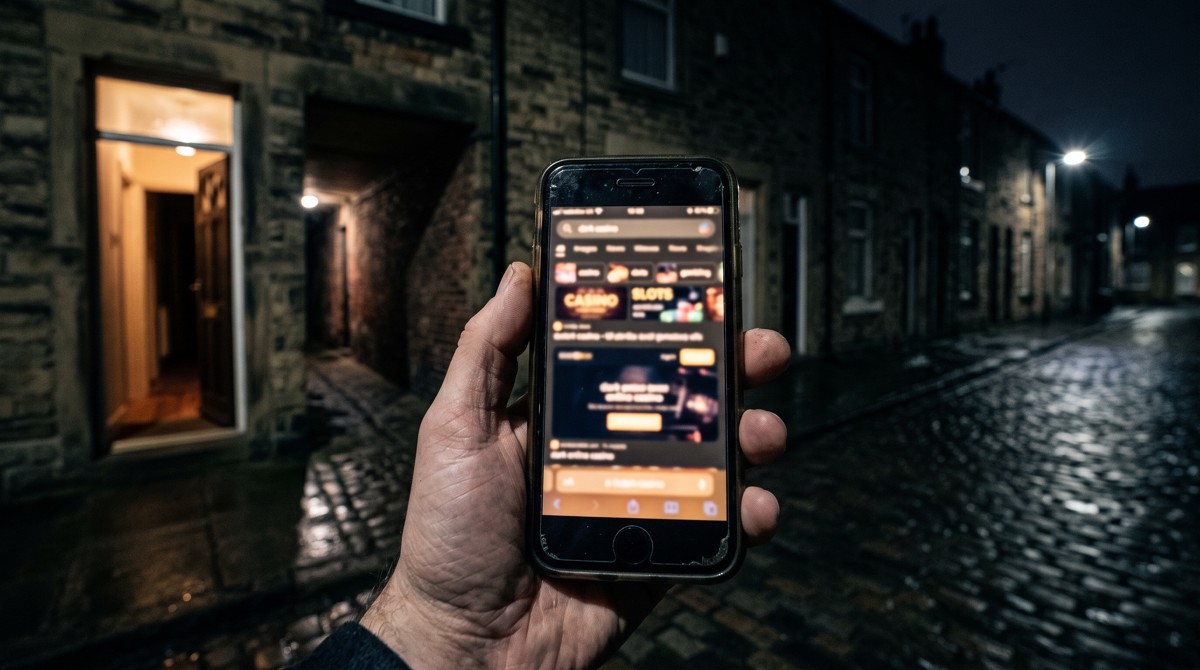
- The Commission's latest research, published on 20 October, found that searching for sites not covered by GamStop was the strongest push towards illegal gambling, followed by looking for sites that would ask for little personal data.
- More than 4,000 people who had gambled in the previous four weeks took part, alongside online listening and in-depth interviews.
- GamStop now has 614,738 people registered, and sign-ups rose 16 per cent in the first half of 2026, with under-25s up 26 per cent.
The findings come from the third phase of the Commission's Consumer Voice research into illegal online gambling, carried out with Yonder Consulting. It combined analysis of how people talk about illegal sites online, a large survey and in-depth interviews.
"Historically, the phrase 'not on Gamstop' was associated with consumers seeking to bypass their self-exclusion from licensed gambling websites. However, the research suggests that this term has developed into something much broader," wrote Rupam Jagota, the Commission's research and impact manager. In online discussions and searches, he said, it now stands for "fewer checks, less friction, faster withdrawals and alternative payment methods".
Why People Move to Illegal Sites
The Commission said using illegal sites remains a niche activity and that most gamblers are not moving their play offshore. But for the minority who do, the reasons vary. Its research groups them into four types: Self-Excluders, Skilled Advocates, Social Explorers and Accidental Tourists.
Skilled Advocates tend to distrust gambling companies, the government and the regulator, so identity checks and payment delays confirm their reasons for leaving. Social Explorers and Accidental Tourists are more likely to treat the same checks as an inconvenience. The research also found that identity and finance checks fed "a broader sense of injustice" among some gamblers, and described a cycle in which people frustrated by the licensed market move to illegal sites "only to face the same issues in a less protected environment", the Racing Post reported.
Social media plays a growing part. People share recommendations and signal which sites they trust in online communities, and for some the route to an illegal site starts on a social platform before moving elsewhere.
A Search Term Worth Millions
The scale of the search demand is large. Keyword data from Ahrefs puts UK searches for "non gamstop casinos" at about 15,000 a month, with dozens of variations on the same phrase. Jagota said many of those searches lead to affiliate pages promoting illegal operators under "not on GamStop" branding, creating "a normalised and established pathway into illegal online gambling for some consumers".
The industry read the research as support for its long-running argument. "The BGC has been clear throughout that excessive friction and demands for personal information risk pushing customers towards illegal gambling sites," a Betting and Gaming Council spokesperson said. Dan Waugh of Regulus Partners was blunter, saying that "where regulation and fiscal policy is antagonistic to the licensed market, you get rampant criminal activity". Flutter has warned of the same risk as online gambling taxes rise.
The Commission rejects the idea of a simple trade-off. It said the evidence shows that use of illegal sites is "more complex than a simple trade-off between levels of regulation and growth of the illegal market", as it continues to roll out financial risk checks.
What Is GamStop and How Long Does It Last?
GamStop is a free service that blocks a registered person from every online gambling site licensed in Great Britain. Users choose an exclusion of six months, one year or five years. It cannot be removed before the chosen period ends, and it stays in place after that until the user contacts GamStop and asks for it to be removed.
According to GamStop's figures for the first half of 2026, more than half of the 614,738 people registered have chosen the maximum five years, and May set a monthly record with 12,236 sign-ups. Under-25s now make up nearly one in three self-exclusions, and Kingston upon Hull has the highest share of residents registered, at 2.8 per cent.
What GamStop Does Not Cover
The scheme does not cover betting shops, casinos or other land-based venues, which run their own exclusion schemes, and a coroner called for GamStop to be extended to National Lottery draws this month. It cannot cover illegal sites either, which is exactly why they advertise themselves as "not on GamStop". Those sites are not allowed to take bets from people in Britain, pay no UK tax and offer none of the protections of the licensed market. The Dutch regulator's record €37 million fine this month showed what that can mean: one operator's terms let it keep the balance of any player who asked to be permanently self-excluded.
The Commission says its next release will look at how much people spend with illegal operators and how vulnerable they are, using financial transaction data, while police continue to raid illegal gambling dens.
Anyone worried about their gambling can contact the National Gambling Helpline free on 0808 8020 133, 24 hours a day.